

EV vs. Petrol Car Running Costs: Save $2,000+ Yearly in Singapore – A 2025 Breakdown

As Singapore accelerates towards its Green Plan 2030, electric vehicles (EVs) are becoming increasingly attractive to cost-conscious drivers. With petrol prices remaining volatile and government incentives favouring electric mobility, many Singaporeans are questioning whether switching to an EV could deliver significant savings. After extensive analysis of current market conditions, maintenance costs, and real-world driving patterns, the answer is a resounding yes – with potential annual savings exceeding $2,000 for the average driver.
This comprehensive breakdown examines every aspect of vehicle ownership costs in Singapore, providing you with the data needed to make an informed decision about your next car purchase.
Understanding Vehicle Running Costs in Singapore
Vehicle ownership in Singapore involves multiple cost components that extend far beyond the initial purchase price. The total cost of ownership includes fuel or electricity expenses, maintenance and servicing, insurance premiums, road tax, and depreciation. For this analysis, we’ll focus on the ongoing operational costs that directly impact your monthly budget.
The average Singaporean driver covers approximately 15,000 to 20,000 kilometres annually, making this our baseline for cost comparisons. Urban driving conditions, with frequent stop-start traffic, particularly favour electric vehicles due to their regenerative braking systems and superior efficiency in city environments.
Understanding these costs becomes crucial when considering that the initial price premium of EVs has decreased significantly in 2025, with some models achieving price parity with their petrol counterparts after government incentives.
Fuel and Energy Costs: The Biggest Difference
The most substantial savings from electric vehicle ownership come from energy costs. The disparity between petrol prices and electricity rates in Singapore creates a compelling financial advantage for EV drivers.
Petrol Prices in Singapore 2025
Current petrol prices in Singapore hover around $2.80 to $3.00 per litre for 95-octane fuel, with premium grades costing even more. These prices reflect global oil market volatility, carbon taxes, and government levies designed to discourage fossil fuel consumption.
For a typical petrol car achieving 12 kilometres per litre in Singapore’s urban conditions, the annual fuel cost for 18,000 kilometres of driving reaches approximately:
- Annual fuel consumption: 1,500 litres
- Annual fuel cost: $4,200 to $4,500
This calculation assumes consistent driving patterns and doesn’t account for price fluctuations that have historically trended upward.
Electricity Costs for EV Charging
Electric vehicle charging costs in Singapore depend primarily on your charging method and timing. Home charging using SP Group’s off-peak tariffs offers the most economical option.
Home Charging Costs:
- Off-peak electricity rate: $0.25 per kWh
- Average EV efficiency: 6 km per kWh
- Annual electricity consumption: 3,000 kWh
- Annual home charging cost: $750
Public Charging Costs:
Public charging stations typically charge between $0.40 to $0.60 per kWh, depending on charging speed and location. Even with a mix of public charging, annual costs rarely exceed $1,200 for equivalent mileage.
The contrast is striking – EV drivers can expect to spend 70-80% less on energy compared to petrol vehicle owners.
Maintenance and Servicing Costs
Vehicle maintenance represents another area where electric vehicles demonstrate clear cost advantages, primarily due to their simplified mechanical design and reduced wear components.
EV Maintenance Advantages
Electric vehicles require significantly less maintenance due to their streamlined powertrains. Key maintenance advantages include:
- No engine oil changes: EVs eliminate the need for regular oil changes, saving $200-300 annually
- Reduced brake wear: Regenerative braking systems extend brake pad life by 2-3 times
- Fewer moving parts: Electric motors have only one moving part compared to thousands in internal combustion engines
- No exhaust system maintenance: Eliminates costs for exhaust repairs and emissions testing
Annual EV maintenance costs typically range from $300 to $500, covering tyre rotations, brake fluid changes, and periodic software updates.
Petrol Car Maintenance Requirements
Traditional petrol vehicles require comprehensive maintenance schedules that become increasingly expensive as the vehicle ages:
- Regular servicing: Every 6 months or 10,000km, costing $200-400 per service
- Engine oil changes: Every 6-12 months, depending on driving conditions
- Transmission servicing: Required every 40,000-60,000km
- Exhaust system repairs: Increasingly common after 5-7 years
- Engine component replacements: Timing belts, water pumps, and other wear items
Annual maintenance costs for petrol vehicles typically range from $800 to $1,500, with older vehicles requiring even higher expenditure.
Insurance and Road Tax Differences
Insurance premiums for electric vehicles in Singapore have become increasingly competitive as insurers recognise their lower risk profiles and simplified repair processes. Many insurance providers now offer specific EV policies with additional benefits such as charging cable coverage and battery protection.
Road tax calculations favour electric vehicles through the government’s Vehicle Emissions Scheme (VES). Most EVs qualify for substantial road tax rebates, with some models paying as little as $200 annually compared to $800-1,200 for equivalent petrol vehicles.
The Land Transport Authority’s VES framework provides detailed information about current rebate structures and eligibility criteria for different vehicle categories.
Government Incentives and Rebates
Singapore’s commitment to electric mobility translates into substantial financial incentives that further enhance EV cost advantages:
Current EV Incentives (2025):
- EV Early Adoption Incentive: Up to $20,000 off purchase price
- Additional Registration Fee (ARF) reduction: Significant rebates for qualifying EVs
- Road tax rebates: Up to $20,000 over 5 years for eligible vehicles
- Installation grants: Support for home charging point installation
These incentives effectively reduce the total cost of ownership gap between EVs and petrol vehicles, often resulting in lower overall costs from day one.
Real-World Cost Comparison: Popular Models
To illustrate practical savings, let’s examine specific vehicle comparisons based on popular models available in Singapore.
Compact Car Segment
Tesla Model 3 vs. BMW 320i:
- Annual energy costs: $750 (EV) vs. $4,200 (petrol)
- Annual maintenance: $400 (EV) vs. $1,200 (petrol)
- Annual road tax: $200 (EV) vs. $1,000 (petrol)
- Total annual savings: $2,850
Mid-Size Sedan Segment
BMW iX3 vs. BMW X3:
- Annual energy costs: $900 (EV) vs. $4,800 (petrol)
- Annual maintenance: $500 (EV) vs. $1,400 (petrol)
- Annual road tax: $300 (EV) vs. $1,200 (petrol)
- Total annual savings: $2,700
These comparisons demonstrate consistent savings exceeding $2,000 annually across different vehicle segments, with larger vehicles showing even greater potential savings due to their higher fuel consumption.
Long-Term Financial Benefits
Beyond immediate operational savings, electric vehicle ownership offers several long-term financial advantages:
Depreciation Patterns: EVs are showing improved residual values as charging infrastructure expands and consumer acceptance grows. Battery technology improvements and extended warranties provide additional confidence for used car buyers.
Future-Proofing: Singapore’s planned phase-out of internal combustion engine vehicles by 2040 positions EV owners advantageously for future regulations and potential restrictions on petrol vehicles.
Energy Independence: Home solar integration possibilities allow EV owners to further reduce energy costs and achieve near-complete energy independence for transportation needs.
Technology Updates: Over-the-air software updates continuously improve EV performance and efficiency, potentially increasing savings over time.
Environmental and Social Benefits
While financial savings represent the primary focus of this analysis, EV ownership delivers additional benefits that enhance overall value:
- Reduced carbon footprint: Contributing to Singapore’s climate goals
- Improved air quality: Eliminating local emissions in urban areas
- Reduced noise pollution: Quieter operation benefits entire communities
- Energy security: Reducing dependence on imported fossil fuels
These benefits, while difficult to quantify financially, represent significant value additions for environmentally conscious drivers.
Conclusion
The financial case for electric vehicle ownership in Singapore has never been stronger. With annual savings exceeding $2,000 for most drivers, EVs represent a compelling proposition that extends beyond environmental considerations to deliver tangible economic benefits.
Current government incentives, combined with lower operational costs and improving technology, create an optimal environment for EV adoption. As charging infrastructure continues expanding and battery technology advances, these advantages will only strengthen.
For Singaporean drivers considering their next vehicle purchase, the numbers speak clearly – electric vehicles offer substantial long-term savings whilst supporting the nation’s sustainability goals. The transition to electric mobility represents not just an environmental choice, but a financially sound investment in the future of transportation.
Ready to explore electric vehicle options that could save you thousands annually? Browse our comprehensive EV reviews and comparisons to find the perfect electric vehicle for your Singapore driving needs. Contact our expert team for personalised advice on maximising your EV savings and taking advantage of current government incentives.

Trade-In / Sell Your Car to Save More
Only the best trade-in value for your used car when you purchase a new car with us.

Fastest Way to Sell
Quick and easy process. Sell your car faster with us and get cash instantly.

Best Price Guaranteed
Get the best offer for your car, expect a more-than-fair valuation from us.

Transparent Service
100% no hidden fees – only transparent, fast and seamless service with us.
Electric Car Guide
Honda Reviews
BYD Atto 3 2025 #2
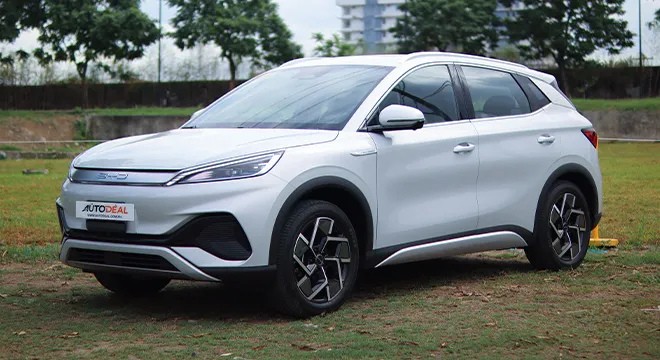
Overview The Atto 3 is BYD’s offering to the electric compact crossover segment that embodies a fusion of modern design, cutting-edge technology, and eco-friendly mobility. Its exterior exudes a sleek and aerodynamic profile, characterized by smooth curves and a streamlined silhouette. Sporting a slew of features along with its unique design, the Atto 3 is […]
BYD Atto 3 2025 #3
Overview The Atto 3 is BYD’s offering to the electric compact crossover segment that embodies a fusion of modern design, cutting-edge technology, and eco-friendly mobility. Its exterior exudes a sleek and aerodynamic profile, characterized by smooth curves and a streamlined silhouette. Sporting a slew of features along with its unique design, the Atto 3 is […]
BYD Atto 3 2025 #4
Overview The Atto 3 is BYD’s offering to the electric compact crossover segment that embodies a fusion of modern design, cutting-edge technology, and eco-friendly mobility. Its exterior exudes a sleek and aerodynamic profile, characterized by smooth curves and a streamlined silhouette. Sporting a slew of features along with its unique design, the Atto 3 is […]