
Deepal S07 vs MG MGS5 EV: 2025 Rebate Guide Singapore

The electric vehicle landscape in Singapore continues to evolve rapidly, with 2025 bringing exciting new affordable options for local drivers. Two standout contenders in the competitive EV market are the Deepal S07 and the MG MGS5 EV, both positioned as accessible entry points into electric mobility. With the Singapore government’s continued commitment to EV adoption through various incentive schemes, understanding the rebate breakdown for these vehicles becomes crucial for making an informed purchasing decision.

As someone who has extensively tested both vehicles on Singapore’s roads, I can attest that the choice between these two affordable EVs isn’t straightforward. Each offers distinct advantages that appeal to different types of drivers, and when factoring in the available rebates and incentives for 2025, the value proposition becomes even more compelling.

Understanding Singapore’s 2025 EV Incentive Landscape

Before diving into the specific comparison between the Deepal S07 and MG MGS5 EV, it’s essential to understand the current rebate structure that makes these vehicles more affordable for Singaporean buyers. The Land Transport Authority (LTA) continues to offer substantial incentives through the Electric Vehicle Early Adoption Incentive (EEAI) scheme, which significantly reduces the overall cost of EV ownership.

For 2025, eligible EVs can receive rebates of up to S$25,000, with the exact amount depending on the vehicle’s Open Market Value (OMV) and carbon efficiency rating. Additionally, buyers benefit from reduced registration fees and road tax structures specifically designed to encourage EV adoption. The LTA’s official website provides comprehensive details about current incentive structures and eligibility criteria.

Key Rebate Components for 2025

The rebate structure for both the Deepal S07 and MG MGS5 EV includes several components:

  • EEAI rebate: Up to S$25,000 based on OMV
  • Additional Registration Fee (ARF) reduction: Significant savings compared to ICE vehicles
  • Road tax benefits: Lower annual road tax rates for EVs
  • Carbon Efficiency Grant: Additional incentives for highly efficient EVs

Deepal S07: The Tech-Forward Contender

The Deepal S07 represents a compelling entry from the Chinese automotive manufacturer, bringing impressive technology and features at an attractive price point. Having spent considerable time behind the wheel of this vehicle, I can confidently say it punches well above its weight class in terms of tech integration and overall refinement.

Specifications and Features

The S07 comes equipped with a robust electric powertrain that delivers respectable performance for Singapore’s urban environment. The vehicle features a 75kWh battery pack that provides an estimated range of approximately 520 kilometres on a single charge, making it well-suited for both daily commuting and longer journeys around the island.

Key features that set the Deepal S07 apart include:

  • 15.6-inch central touchscreen with intuitive interface
  • Advanced driver assistance systems including adaptive cruise control
  • Wireless smartphone connectivity with Apple CarPlay and Android Auto
  • Premium interior materials that rival more expensive vehicles
  • Fast charging capability supporting up to 120kW DC charging

2025 Rebate Breakdown for Deepal S07

Based on the current pricing structure and incentive schemes, the Deepal S07 qualifies for substantial rebates:

  • Base price: Approximately S$190,000 (before rebates)
  • EEAI rebate: S$20,000
  • ARF reduction: S$15,000
  • Additional incentives: S$3,000
  • Effective price after rebates: Around S$152,000

MG MGS5 EV: The Established Alternative

The MG MGS5 EV brings the heritage of an established brand with modern electric technology. MG’s presence in Singapore has grown significantly, and their after-sales support network provides additional peace of mind for buyers considering this option.

Specifications and Performance

The MGS5 EV offers a different approach to electric mobility, focusing on practicality and reliability. The vehicle features a 61kWh battery pack with an estimated range of 425 kilometres, which, while slightly less than the S07, remains more than adequate for Singapore’s driving conditions.

Notable features of the MG MGS5 EV include:

  • 10.1-inch infotainment system with comprehensive connectivity options
  • Spacious interior with excellent rear passenger accommodation
  • Comprehensive safety package including automatic emergency braking
  • Practical boot space ideal for families and commercial use
  • Reliable charging performance with support for 87kW DC fast charging

2025 Rebate Breakdown for MG MGS5 EV

The MG MGS5 EV’s rebate structure presents an attractive value proposition:

  • Base price: Approximately S$175,000 (before rebates)
  • EEAI rebate: S$18,000
  • ARF reduction: S$14,000
  • Additional incentives: S$2,500
  • Effective price after rebates: Around S$140,500

Head-to-Head Comparison: Performance and Practicality

Driving Experience

Having extensively tested both vehicles on Singapore’s roads, the driving experience differs noticeably between the two. The Deepal S07 offers a more refined and tech-forward experience, with superior acceleration and a more sophisticated suspension setup that handles Singapore’s varied road surfaces with greater composure.

The MG MGS5 EV, whilst not as dynamically engaging, provides a comfortable and predictable driving experience that many families will appreciate. The steering is well-weighted, and the regenerative braking system is well-calibrated for stop-and-go traffic conditions common in Singapore.

Interior Space and Comfort

Both vehicles offer adequate space for Singapore families, but with different strengths. The Deepal S07 impresses with its premium materials and advanced technology integration, creating a more upmarket ambience despite its affordable positioning.

The MG MGS5 EV prioritises practicality, offering slightly more rear passenger space and a more generous boot capacity. For families frequently carrying luggage or shopping, the MG’s additional storage capacity proves beneficial.

Technology and Connectivity

The technology divide between these vehicles becomes apparent immediately upon entering the cabin. The Deepal S07’s larger touchscreen and more intuitive interface provide a notably superior user experience. The vehicle’s over-the-air update capability ensures that the software remains current with the latest features and improvements.

The MG MGS5 EV’s infotainment system, while functional, feels less sophisticated in comparison. However, it includes all essential connectivity features and proves reliable in daily use.

Charging Infrastructure Considerations in Singapore

Singapore’s expanding charging network makes both vehicles practical choices for daily use. The island’s comprehensive coverage of charging points, from shopping centres to HDB car parks, ensures that range anxiety becomes minimal for both options.

Charging Performance Comparison

  • Deepal S07: 120kW DC fast charging capability allows for rapid top-ups during longer journeys
  • MG MGS5 EV: 87kW DC fast charging provides adequate performance for most users’ needs

Both vehicles support AC charging at home, with the S07 offering slightly faster AC charging rates. For typical Singaporean usage patterns, both charging capabilities prove more than sufficient.

Total Cost of Ownership Analysis

Beyond the initial purchase price and rebates, the total cost of ownership includes factors such as maintenance, insurance, and depreciation. Both vehicles benefit from lower running costs compared to traditional petrol vehicles, with electricity costs significantly lower than fuel expenses.

Maintenance Considerations

Electric vehicles generally require less maintenance than conventional cars, with both the Deepal S07 and MG MGS5 EV expected to deliver low ongoing costs. However, MG’s established service network in Singapore provides an advantage in terms of convenience and potentially lower service costs.

Insurance and Depreciation

Insurance costs for both vehicles remain competitive, with many insurers now offering specialist EV policies. Depreciation patterns for these newer EV models remain to be fully established, though both brands show commitment to the Singapore market, which should support residual values.

Environmental Impact and Sustainability

Both vehicles contribute significantly to Singapore’s carbon reduction goals. The Deepal S07’s larger battery and longer range potentially reduce the frequency of charging cycles, whilst the MG MGS5 EV’s efficient power consumption maximises the environmental benefits of Singapore’s increasingly clean electricity grid.

The environmental benefits extend beyond direct emissions reduction, with both vehicles supporting Singapore’s Smart Nation initiatives and contributing to improved urban air quality.

Which EV Offers Better Value for Singaporean Buyers?

The choice between the Deepal S07 and MG MGS5 EV ultimately depends on individual priorities and usage patterns. After extensive testing and analysis, here’s my assessment:

Choose the Deepal S07 if:

  • Technology and premium features are priorities
  • Longer range capability is important
  • You value cutting-edge infotainment systems
  • Fast charging capability is essential

Choose the MG MGS5 EV if:

  • Lower overall cost is the primary concern
  • Established brand presence and service network matter
  • Practical space requirements are paramount
  • Reliable, proven technology is preferred

Conclusion: Making the Right Choice for 2025

Both the Deepal S07 and MG MGS5 EV represent excellent value propositions in Singapore’s affordable EV segment, particularly when factoring in the substantial government rebates available for 2025. The decision ultimately comes down to personal preferences regarding technology, brand preference, and specific usage requirements.

The Deepal S07 emerges as the choice for tech-enthusiastic buyers who want the latest features and longest range, whilst the MG MGS5 EV appeals to practical buyers seeking proven reliability and lower overall costs. With rebates making both vehicles significantly more affordable, 2025 presents an excellent opportunity for Singaporean drivers to make the transition to electric mobility.

For those considering either vehicle, I recommend taking advantage of test drive opportunities to experience the differences firsthand. Both represent significant steps forward in affordable EV technology and demonstrate how accessible electric driving has become for Singapore families.

If you’re ready to explore these exciting EV options further, consider visiting authorised dealerships to discuss specific pricing and available incentives for your particular circumstances. The transition to electric driving has never been more accessible or financially attractive for Singaporean buyers.

2025 EV Incentives Singapore: EEAI, VES & Maximise Rebates

Singapore’s commitment to becoming a smart and sustainable nation has never been more evident than in its comprehensive electric vehicle incentive programmes for 2025. As the island nation accelerates towards its goal of phasing out internal combustion engine vehicles by 2040, savvy car buyers have unprecedented opportunities to save substantial amounts on their electric vehicle purchases through the Enhanced Electric Vehicle Incentive (EEVI), previously known as EEAI, and the Vehicular Emissions Scheme (VES).

Having personally reviewed numerous electric vehicles available in Singapore’s market and witnessed firsthand the transformative impact of these incentives on consumer behaviour, I can confidently say that 2025 represents a golden opportunity for prospective EV owners. The government’s strategic approach to EV adoption through financial incentives has created a landscape where electric vehicles are not just environmentally responsible choices, but financially advantageous ones as well.

This comprehensive guide will navigate you through the intricacies of Singapore’s 2025 EV incentive framework, helping you understand exactly how much you can save and the strategies to maximise your rebates when purchasing your next electric vehicle.

Understanding Singapore’s 2025 EV Incentive Framework

Singapore’s approach to electric vehicle adoption relies on a dual-incentive system designed to make EVs financially attractive whilst simultaneously penalising high-emission vehicles. This carrot-and-stick approach has proven remarkably effective in shifting consumer preferences towards cleaner transportation options.

Early Electric Vehicle Incentive (EEVI) Overview

The Enhanced Electric Vehicle Incentive, an evolution of the previous EEAI scheme, remains the cornerstone of Singapore’s EV promotion strategy. Unlike many global markets where EV incentives are gradually being phased out, Singapore has maintained robust support for electric vehicle adoption, recognising the unique challenges faced by car buyers in a high-cost environment.

The EEVI programme provides direct rebates that are applied at the point of purchase, reducing the upfront cost burden that has traditionally been the primary barrier to EV adoption. This immediate financial relief makes premium electric vehicles accessible to a broader range of consumers, accelerating the transition away from petrol-powered vehicles.

Vehicular Emissions Scheme (VES) for Electric Vehicles

The VES serves as both an incentive for clean vehicles and a deterrent for polluting ones. For electric vehicles, which produce zero direct emissions, the VES provides additional rebates that complement the EEVI, creating a substantial combined saving opportunity. The scheme evaluates vehicles based on their carbon emissions, nitrogen oxide emissions, hydrocarbon emissions, carbon monoxide emissions, and particulate matter emissions.

Electric vehicles consistently achieve the highest VES ratings due to their zero direct emissions profile, making them eligible for the maximum available rebates under this scheme.

EEAI Evolution: Enhanced Electric Vehicle Incentive (EEVI) Explained

The transition from EEAI to EEVI represents Singapore’s refined approach to electric vehicle incentives, incorporating lessons learned from previous implementations and adapting to the evolving EV market landscape.

Eligibility Criteria for EEVI

To qualify for EEVI rebates in 2025, vehicles must meet several stringent criteria that ensure only genuine electric vehicles benefit from the scheme. The vehicle must be a fully electric vehicle with zero direct emissions, registered for the first time in Singapore, and purchased from an authorised dealer.

The scheme specifically excludes hybrid vehicles, including plug-in hybrids, focusing purely on battery electric vehicles (BEVs) that represent the future of clean transportation. This targeted approach ensures that incentive funding supports the most environmentally beneficial vehicle choices.

EEVI Rebate Amounts and Categories

The EEVI provides rebates of up to S$25,000 for qualifying electric vehicles, with the exact amount determined by factors including the vehicle’s OMV (Open Market Value) and specific model characteristics. Premium electric vehicles with higher OMVs may receive substantial rebates that significantly offset their purchase price.

The rebate structure is designed to make electric vehicles competitive with their internal combustion engine equivalents, addressing the historical price premium associated with EV technology. For many models, the combined effect of EEVI and VES rebates can result in total savings exceeding S$30,000.

VES Rebates for Electric Vehicles in 2025

The Vehicular Emissions Scheme continues to play a crucial role in Singapore’s EV incentive landscape, providing additional financial benefits for zero-emission vehicles whilst maintaining the polluter-pays principle for high-emission vehicles.

VES Band Classifications for EVs

Electric vehicles consistently qualify for VES Band A1 classification, the highest environmental rating available under the scheme. This classification reflects their zero direct emissions profile and positions them for the maximum available VES rebates.

The Band A1 classification for electric vehicles provides rebates of up to S$25,000, depending on the vehicle’s characteristics and market positioning. This substantial rebate, when combined with EEVI benefits, creates compelling financial incentives for EV adoption.

How VES Rebates Work for Different EV Models

VES rebates are calculated based on a vehicle’s emissions performance relative to established benchmarks, with electric vehicles receiving the maximum benefit due to their zero direct emissions. The rebate amount can vary between different EV models based on factors such as their energy efficiency ratings and overall environmental impact assessment.

Luxury electric vehicles, despite their higher purchase prices, often receive the full VES rebate, making them significantly more affordable than their traditional luxury counterparts. Mass-market EVs also benefit substantially, often seeing their effective purchase price reduced to levels competitive with comparable petrol vehicles.

How to Maximise Your EV Rebates in Singapore

Strategic planning can significantly enhance the financial benefits available through Singapore’s EV incentive programmes, potentially saving tens of thousands of dollars on your electric vehicle purchase.

Timing Your EV Purchase Strategically

The timing of your EV purchase can impact the total rebates available, particularly as incentive programmes evolve and vehicle availability fluctuates. Purchasing early in the incentive period often ensures access to the full range of available rebates before any potential programme adjustments.

Market dynamics also play a role, with some periods offering better deals from dealers who may provide additional incentives to complement government rebates. Staying informed about both government policy changes and dealer promotions can maximise your overall savings.

Choosing the Right EV Model for Maximum Incentives

Different EV models may qualify for varying rebate amounts based on their specifications and classifications. Researching the specific rebate eligibility for different models can help you select a vehicle that maximises your financial benefits whilst meeting your transportation needs.

Consider factors such as the vehicle’s VES band, EEVI eligibility, and any additional manufacturer incentives when making your selection. Some models may offer superior rebate combinations that make them significantly more cost-effective than alternatives.

Additional Cost-Saving Strategies

Beyond government rebates, several additional strategies can further reduce your EV ownership costs. These include taking advantage of reduced road tax for electric vehicles, lower maintenance costs compared to internal combustion engines, and potential savings on COE (Certificate of Entitlement) premiums in certain categories.

Home charging infrastructure investments, whilst requiring upfront costs, can provide long-term savings compared to public charging or petrol costs. Many EV owners find that the combination of rebates and operational savings creates a compelling total cost of ownership proposition.

Popular EV Models and Their Incentive Eligibility

Understanding how different EV models perform under Singapore’s incentive schemes can inform your purchasing decision and help you maximise available rebates.

Tesla Models and Rebate Calculations

Tesla vehicles, being among the most popular EVs in Singapore, typically qualify for substantial combined rebates under both EEVI and VES schemes. The Model 3, Model Y, and Model S all achieve Band A1 VES classification and EEVI eligibility, resulting in significant purchase price reductions.

The exact rebate amounts vary based on each model’s specifications and pricing, but Tesla buyers can generally expect combined savings of S$20,000 to S$30,000 or more, depending on the specific variant chosen.

European and Korean EV Options

European brands such as BMW, Mercedes-EQS, Audi e-tron, and Porsche Taycan, along with Korean manufacturers like Hyundai and Kia, offer various EV models that qualify for Singapore’s incentive programmes. These vehicles often combine luxury features with substantial rebate eligibility, making premium EV ownership more accessible.

Korean EVs, in particular, have gained popularity due to their competitive pricing combined with full rebate eligibility, often resulting in exceptional value propositions for Singapore consumers.

Chinese EV Brands in Singapore

The emergence of Chinese EV manufacturers in Singapore’s market has introduced new options that typically qualify for full incentive benefits whilst offering competitive pricing. Brands like BYD and other Chinese manufacturers often provide excellent value when combined with available rebates.

These vehicles represent an opportunity for cost-conscious consumers to access modern EV technology with substantial government support, making electric vehicle ownership accessible to a broader market segment.

Application Process and Documentation

Successfully claiming your EV rebates requires understanding the application process and ensuring you have all necessary documentation prepared in advance.

Required Documents for Rebate Claims

The rebate application process requires specific documentation including vehicle registration documents, purchase agreements, and proof of payment. Working with authorised dealers familiar with the process can streamline your application and ensure all requirements are met.

Maintaining organised records throughout your purchase process will facilitate smooth rebate processing and help avoid delays in receiving your incentive payments.

Timeline and Processing Expectations

Rebate processing times can vary, but typically range from several weeks to a few months depending on application volume and verification requirements. Understanding the timeline helps set appropriate expectations and plan your financing accordingly.

The Land Transport Authority (LTA) provides official guidance on processing times and requirements, serving as the authoritative source for the most current information on rebate programmes.

Future of EV Incentives Beyond 2025

Singapore’s long-term vision for electric vehicle adoption suggests that whilst specific incentive programmes may evolve, support for EV adoption will continue as the nation progresses towards its 2040 goal of phasing out internal combustion engine vehicles.

Understanding the trajectory of these programmes can inform long-term vehicle purchasing decisions and help consumers plan for future EV ownership opportunities. The government’s commitment to sustainable transportation indicates that EV support will remain a policy priority, though the specific mechanisms may adapt to changing market conditions.

Conclusion

Singapore’s 2025 EV incentive landscape offers unprecedented opportunities for savvy car buyers to embrace electric vehicle technology whilst achieving substantial financial savings. The combination of EEVI and VES rebates can reduce EV purchase costs by tens of thousands of dollars, making electric vehicles not just environmentally responsible choices, but financially advantageous ones.

By understanding the intricacies of these incentive programmes and strategically planning your EV purchase, you can maximise your rebates whilst contributing to Singapore’s sustainable transportation goals. The current incentive environment represents an ideal time to transition to electric vehicle ownership, combining cutting-edge technology with significant financial benefits.

Whether you’re considering a luxury Tesla, a practical Korean EV, or an innovative Chinese electric vehicle, Singapore’s 2025 incentive programmes provide compelling reasons to make the switch to electric. Take advantage of these opportunities to experience the future of transportation whilst enjoying substantial savings on your investment.

Ready to explore Singapore’s best EV deals? Browse our comprehensive reviews and comparisons to find the perfect electric vehicle for your needs and budget, complete with detailed rebate calculations for maximum savings.

[FOR REFERENCE] BYD Atto 2 Premium review: A better entry point

Overview

The Atto 2 is BYD’s new entry-level model and impressively, it is better than both the Dolphin and Atto 3.

Before the Atto 2 came along, the most affordable BYD model here was the Dolphin. But it never sold as well as its siblings, the Atto 3 and Seal and later, Sealion 7.

Perhaps the Dolphin wasn’t stylish enough, or its hatchback form isn’t what today’s consumers want. Now, BYD is hoping that the larger, more powerful and more affordable Atto 2 will help it make inroads in the $160k segment.

What consumers want

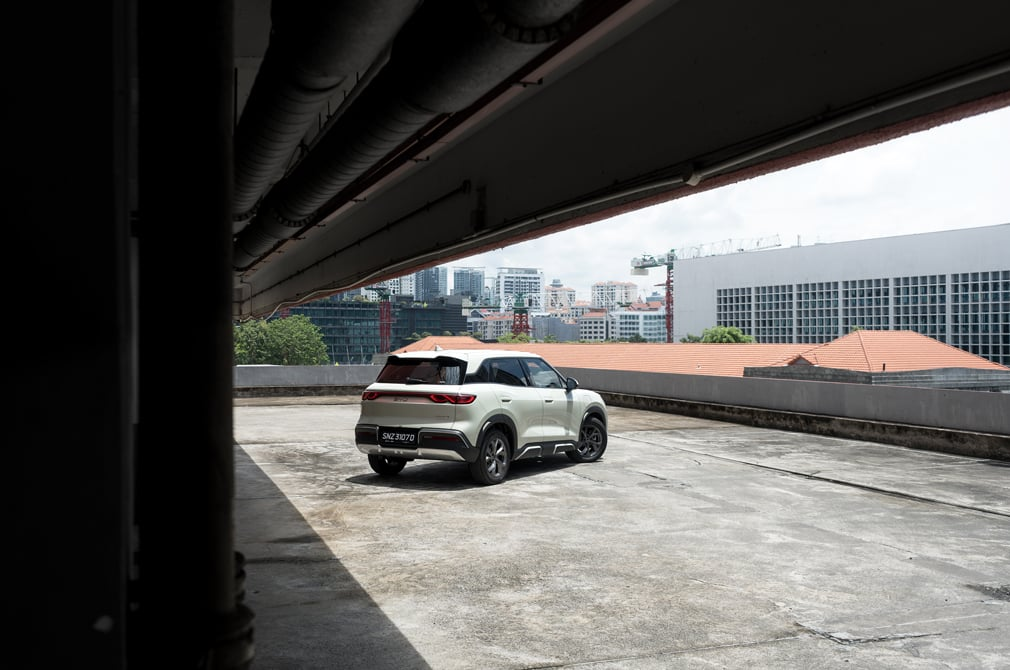
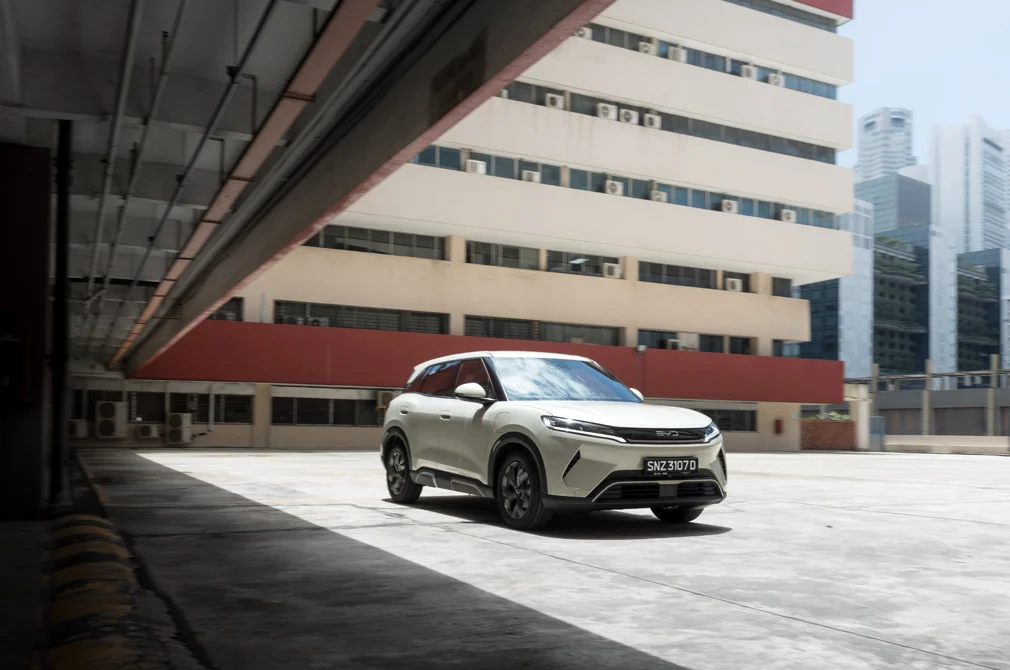
The Atto 2 has the right body style for a world still obsessed with SUVs and crossovers. It’s a relatively good-looking model, with a sleek front end, rounded flanks, an angular rear end, and unpainted plastic claddings for an adventurous vibe. Interestingly, the Atto 2’s taillights have a similar pattern to the ones on the Dolphin.

Smaller entry-level models typically offer interesting paintwork colours. But surprisingly, the Breeze Green hue seen here is the snazziest option available. The other options are monochromatic, consisting of Cosmos Black, Ski White, and Harbour Grey.

Then again, most buyers typically play it safe and opt for one of these “boring” hues. Few would go for yellow, pink, or red variants, since it could make the car harder to sell later.

Size-wise, the Atto 2 is compact, measuring 4310mm long, 1830mm wide and 1675mm tall, with a wheelbase length of 2620mm. But as we shall soon see, despite the wheelbase being shorter than 2700mm, the well-packaged interior results in a spacious backseat.

Sensible Cockpit

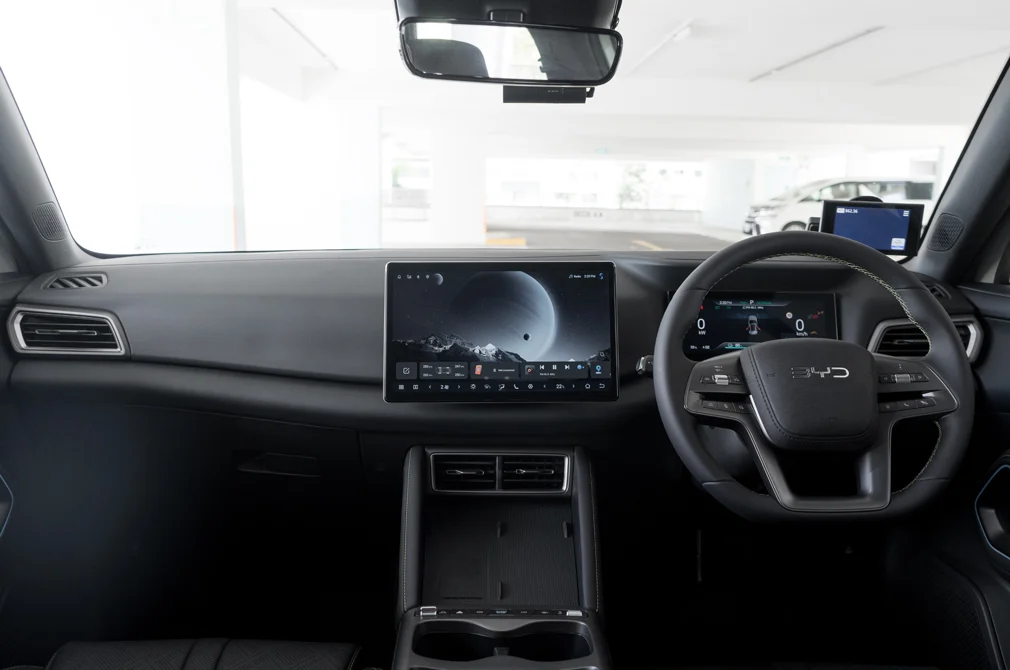
If your only experiences in a BYD were the Dolphin or Atto 3, then you’ll prefer the Atto 2’s cockpit. There’s nothing whimsical or eclectic here – just a functional layout and sensible controls. Unlike other Chinese EV models that have nearly eliminated physical buttons, BYD retains theirs. I hope it continues to do so.

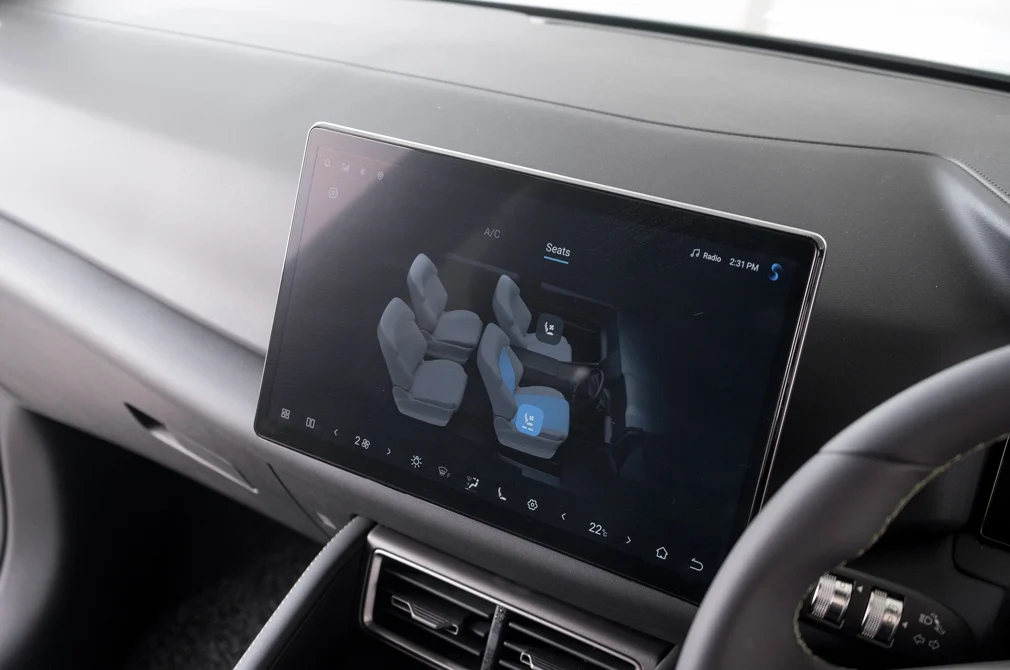
Controls for the audio, adaptive cruise control and telephony are found on the steering wheel. And unlike the buttons on the Atto 3, these feel more solid and thus have more satisfying tactility to them. It would’ve been nice if the climate controls were also physical, but at least they are permanently docked at the bottom of the 12.8-inch touchscreen.

Said touchscreen is responsive and more importantly, presents a relatively intuitive menu layout. For convenience, switching off the Lane Departure Warning/Lane Departure Assist functions disables them permanently, saving you the trouble of having to do it again the next time you turn on the car.

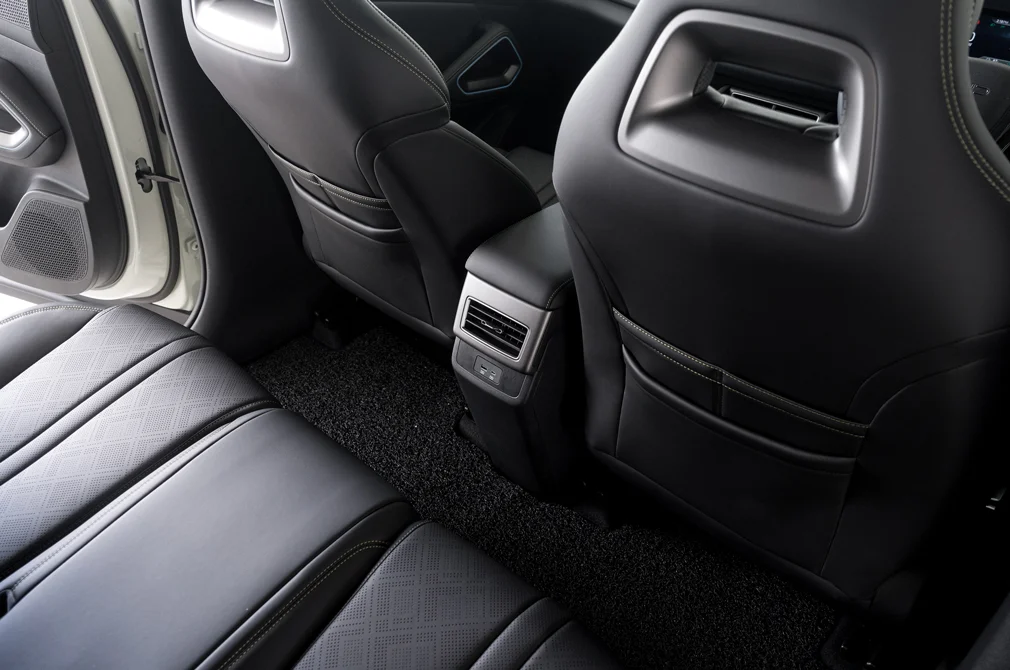
Other handy features include ventilated front seats, a 50-watt charging pad, wireless (or wired if you prefer) Apple CarPlay and Android Auto, and USB-A and USB-C ports. The latter are also provided to backseat passengers.

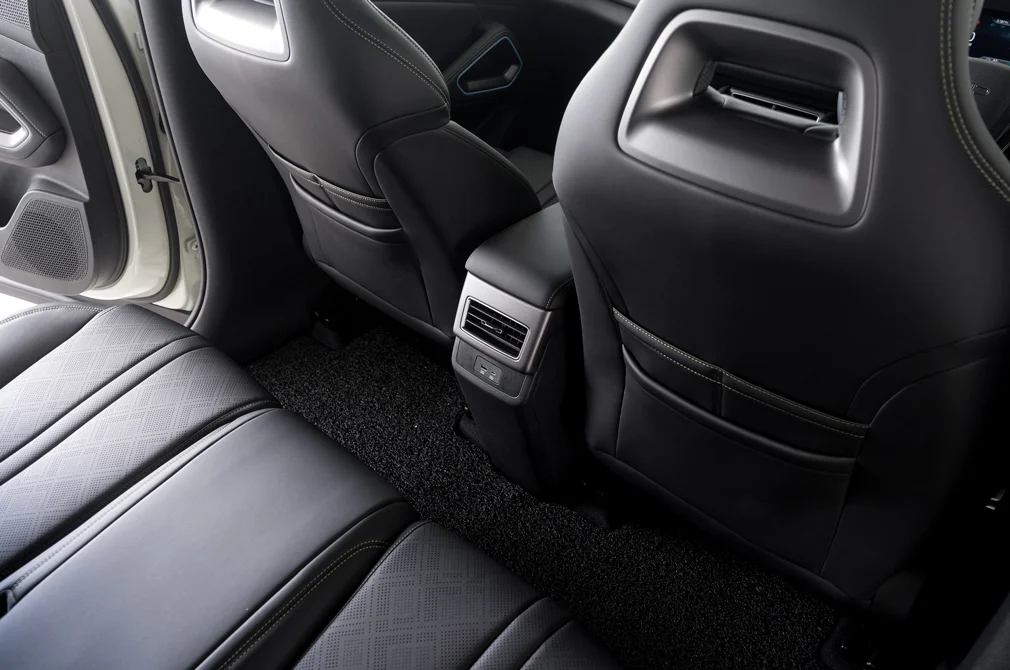
Both rear legroom and headroom are generous given the wheelbase length. There’s even good foot space beneath the front seats, in case occupants have large feet or bulky shoes. The only downside here is that there’s only one air-con vent – would it have really cost too much to make two?

Speaking of air-conditioning, the Atto 2’s system is strange. It takes a few minutes for cool air to emerge, which makes one think that something is wrong with the compressor. Not a deal-breaker, but it must work faster because you won’t always get to park under shelter.

Boot capacity is 380 litres with the rear seats in place and 1,320 litres when they’re folded. These figures are decent considering the car’s compact dimensions, with the relatively low loading height making it easier for petite drivers to load/unload heavy items.

Relaxed softness

The Atto 2 would suit a first-time EV driver who wants an easy-going daily runabout. With 100kW (134bhp) and 290Nm of torque, there’s more than enough poke for driving around Singapore.

Acceleration is seamless, but it’s also progressive so as not to scare newbies. There’s a “Sport” mode for keener drivers, but it doesn’t really make a difference.

Still, when needed, nailing the accelerator pedal gives you a century sprint time of 9 seconds, which is quicker than most ICE cars with the same power output. The steering feels accurate as well, which is a pleasant surprise.

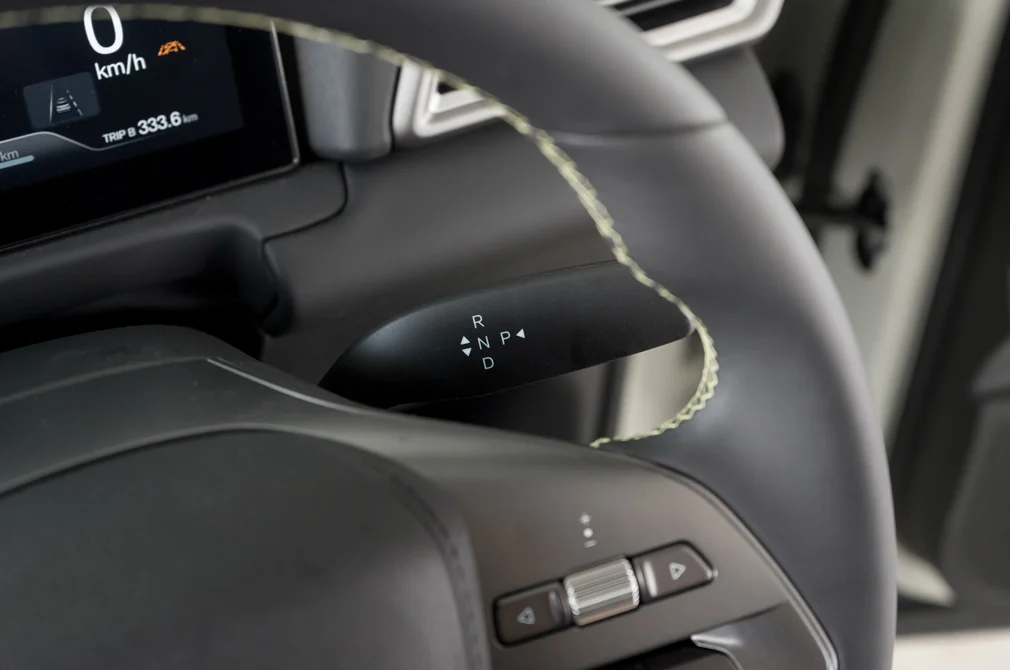
Because the Atto 2 uses a column-mounted gear selector, the indicator stalk is on the left, which to me is more intuitive than being on the right, as seen in other BYD models.

The ride quality is another plus point, with pliant dampers providing a soft and forgiving ride. With so many road works that lead to poor patching jobs and undulating surfaces, the gentleness of the Atto 2 is most welcome indeed. However, wind noise is prevalent here, even at 80km/h on the expressway.

The Atto 2 doesn’t have keen drivers in mind. Push it and the car tries its best to respond, but the comfort-biased tyres and suspension only lead to understeer. Forget spirited endeavours; just enjoy the car’s relaxed nature.

Smooth driving inputs will further complement the Atto 2’s efficiency. Although the crossover’s claimed average consumption is 5.9km/kWh, I easily managed 7.4km/kWh. That said, it’s likely that you’ll be charging this car weekly, as the 51.13kWh Blade Battery only has a WLTP range of 345km.

A good start

The Atto 2 is a pleasant surprise because it’s not a pared-down entry-level model. Its list of advanced driver assistance and safety features (ADAS) is generous (but it lacks blind spot monitoring), interior space is plentiful, and the layout is ergonomic. It looks fresher and feels better than the older, more expensive Atto 3.

At the $164,000 mark (correct at time of writing), the Atto 2’s main rival is the Aion Y Plus Premium, which apart from being larger and more spacious, offers a longer driving range of 430km, too. Though the Atto 2 is a promising proposition, it’s only prudent to check out equivalent models before making a buying decision.

specifications

BYD Atto 2 (A)
MotorPermanent magnet synchronous
max power100kW (134hp)
Max torque290Nm
gearboxSingle-speed
0-100Kmh9 seconds
Top speed160kmh
Battery51.13kWh
Range345km (WLTP)
consumption5.9km/kWh (combined)
price incl. coeFrom $164,388
distributorVantage Automotive